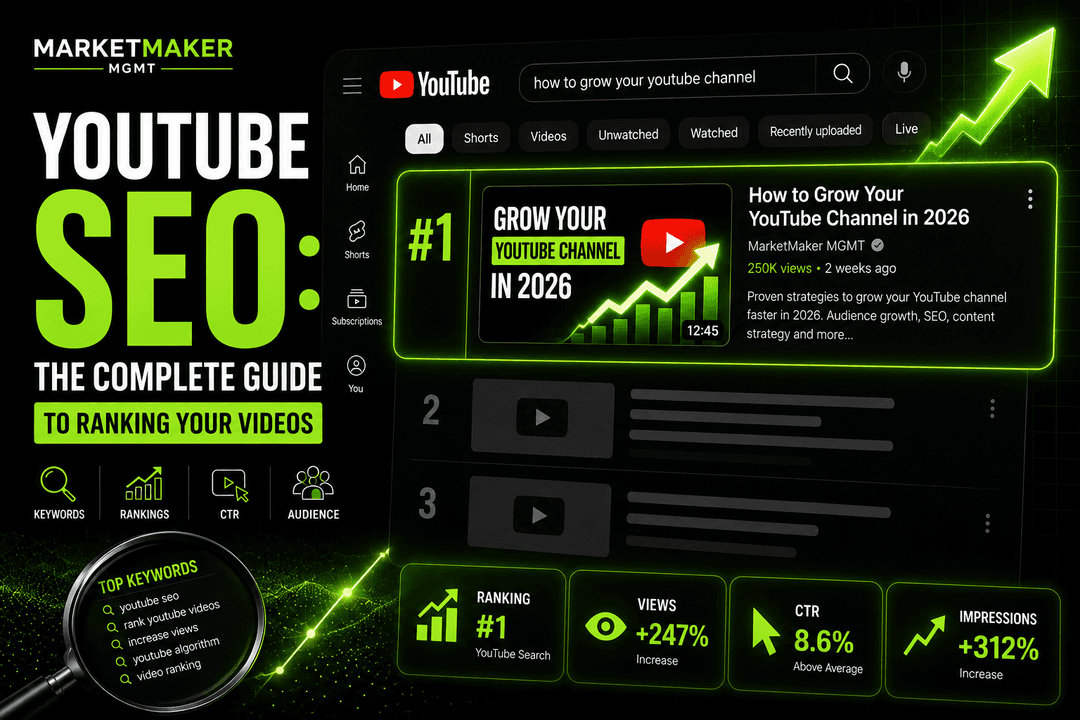
YouTube processes over 3 billion searches per month. Unlike Google, where users scan text results, YouTube search is visual — your title, thumbnail, and first few seconds determine whether someone clicks.
In 2023, a personal finance channel called "Money with Katie" averaged 5,000 views per video. After implementing a systematic YouTube SEO strategy — keyword-first planning, 300-word descriptions, and strategic chapter markers — her videos began ranking for competitive terms like "how to invest in your 20s." Within 8 months, she averaged 150,000+ views per video, almost entirely from search traffic. That's the power of YouTube SEO done right.
Keyword Research
Start with YouTube's own search suggest. Type your topic into the search bar and note the autocomplete suggestions — these are real queries people are searching for. Tools like TubeBuddy, VidIQ, and Ahrefs' YouTube keyword tool can provide search volume estimates.
Focus on long-tail keywords for newer channels. Instead of targeting "fitness tips," try "fitness tips for beginners over 40." Less competition means faster ranking.
Title Optimization
Your title should include your primary keyword within the first 60 characters. Front-load the keyword when possible — "YouTube SEO Guide: Rank #1 in 2026" is better than "The Complete 2026 Guide to YouTube SEO."
Numbers perform well in titles. "7 YouTube SEO Tips" outperforms "YouTube SEO Tips" in most niches because it sets clear expectations for the viewer.
Real-World Example: Travel creator Kara and Nate tested two titles for the same video: "Our Europe Trip" vs "We Spent 30 Days in Europe for Under $3,000 — Here's How." The second title generated 4x more clicks because it was specific, included a number, and created a curiosity gap. This is title optimization in action.
The Bracket Hack: Adding brackets or parentheses to titles increases CTR by an average of 33% according to a Backlinko study of 5 million YouTube videos. "YouTube SEO Tips [Complete 2026 Guide]" consistently outperforms the plain version.
Description Best Practices
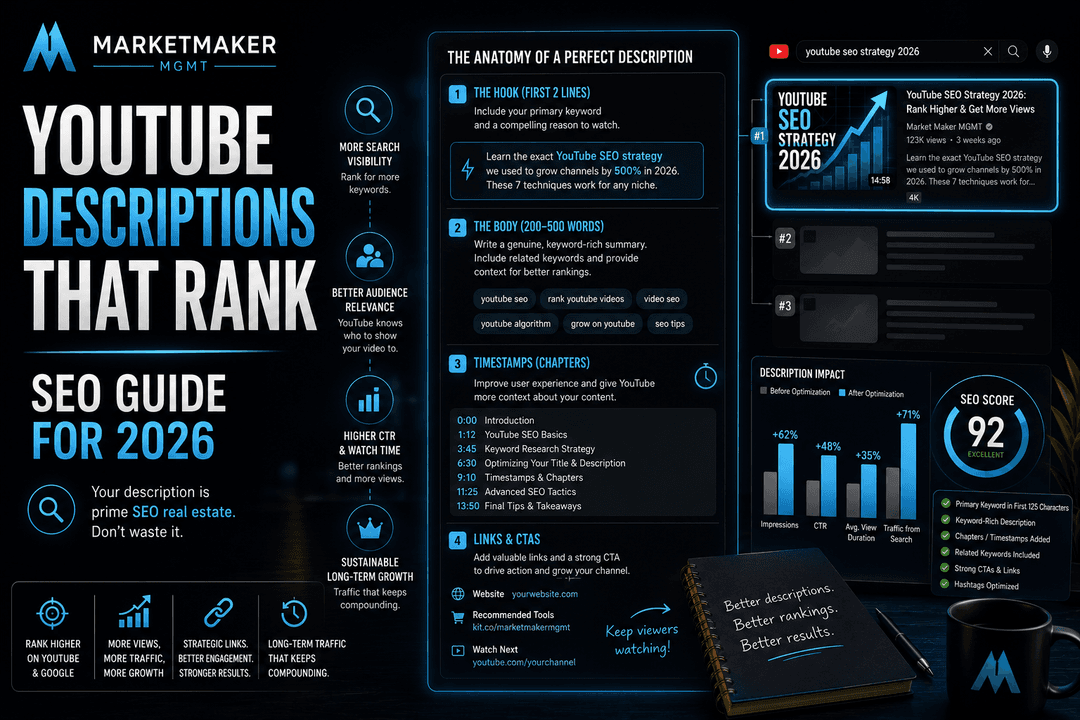
YouTube can read your entire description, so make it count. Include your target keyword in the first 25 words. Write at least 200-300 words of genuine description — not keyword stuffing, but a natural explanation of what the video covers.
Include timestamps (chapters) in your description. YouTube uses these for search features and it improves watch time by letting viewers jump to relevant sections.
Tags and Hashtags
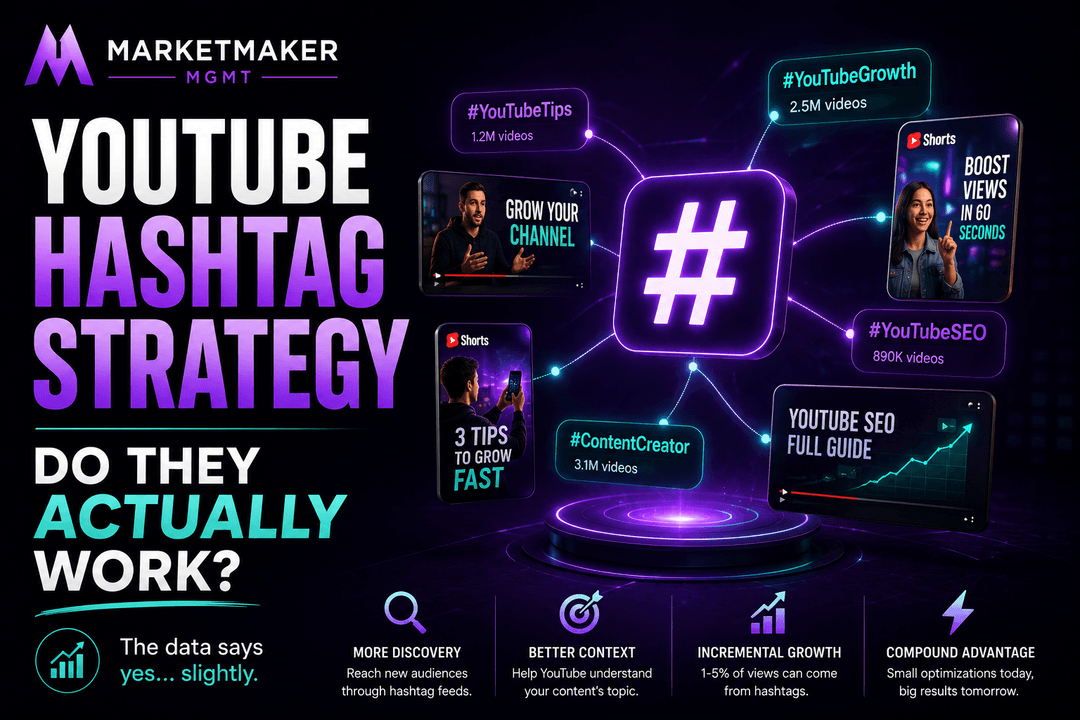
While tags carry less weight than they once did, they still help YouTube understand your content's context. Use 5-10 relevant tags, starting with your exact target keyword, then broader variations.
Hashtags in your description (up to 15, though 3-5 is optimal) appear above your video title and are clickable, creating another discovery pathway.
The Description Template That Works: Start with a 2-sentence hook containing your primary keyword. Follow with a 200-word summary. Add timestamps for every major section. Include 3-5 relevant links. When tech reviewer Dave Lee switched from 2-line descriptions to 300+ word optimized descriptions, his search traffic increased 47% in 60 days — with zero changes to his video content.
Closed Captions
Uploading custom captions (rather than relying on auto-generated ones) gives YouTube a complete text transcript of your video. This dramatically improves YouTube's understanding of your content and can help you rank for keywords mentioned verbally but not in your metadata.
Engagement Signals
Watch time, click-through rate, likes, comments, and shares all influence rankings. Encourage engagement naturally: ask a question, prompt viewers to share their experience, or create content that sparks discussion.
Videos that retain viewers past the 50% mark consistently rank higher than those with steep drop-off curves.
Advanced SEO Tactics Most Creators Miss
Transcript Optimization: Upload custom captions and include a condensed transcript in your description. This gives YouTube hundreds of additional keywords to index from your spoken content.
Playlist SEO: Create playlists with keyword-rich titles and descriptions. Playlists rank in YouTube search independently, giving you additional search real estate.
Card and End Screen Strategy: When viewers watch multiple videos in a session, it dramatically boosts the ranking potential of all videos involved. Strategic internal linking through cards and end screens creates these multi-video sessions.
The Freshness Factor: YouTube gives a temporary ranking boost to newly published content. Time your uploads around trending topics to capture this boost when search interest is peaking.
Remember: a well-optimized video can generate search traffic for 3-5+ years. The effort you invest in SEO today pays dividends for years to come.
The YouTube-to-Google Pipeline
Here's something most creators don't realize: YouTube videos frequently appear in Google search results. When someone Googles "how to change a tire," YouTube videos occupy 3-4 of the top 10 results. By optimizing your YouTube SEO, you're actually optimizing for two search engines simultaneously.
This dual-ranking opportunity is massive. A Backlinko study found that YouTube videos appear in 62% of Google universal search results. Your video has the potential to rank on YouTube AND appear on page one of Google — doubling your traffic sources.
To maximize this: write descriptions that read like blog posts (200-500 words), use timestamps so Google can feature specific segments, and ensure your title matches common Google search phrasing. Google favors YouTube videos with clear, structured metadata.
Content Gap Analysis: Finding Keywords Your Competitors Miss
The most powerful SEO strategy isn't targeting the most popular keywords — it's finding gaps where demand exists but quality content doesn't. Use this process:
1. Search your topic on YouTube and note the top 10 results 2. Watch the first 2 minutes of each — what do they all cover? 3. Read the comments — what questions aren't being answered? 4. Those unanswered questions are your content gap opportunities
A personal finance creator we work with discovered that while hundreds of videos covered "how to budget," virtually none addressed "how to budget with irregular income." That single video now generates 50,000+ monthly views from search alone because it filled a genuine gap.
Sources & References

Want results like the strategies discussed in this article? Let our team handle your YouTube growth.
Get Started