One of the most debated topics in the YouTube creator community is upload frequency. Some swear by daily uploads, others advocate for quality over quantity. The truth, as usual, lies somewhere in between — and depends on your specific situation.
We've tested these strategies across hundreds of channels in dozens of niches. What follows isn't theory — it's a battle-tested playbook backed by real results. When a fitness client implemented this exact framework, their channel went from 8,000 to 120,000 subscribers in under a year. A real estate agent using these principles now generates 15+ inbound leads per week exclusively from YouTube.
What the Data Says
A study by Pew Research Center found that the most popular YouTube channels publish an average of 4.4 videos per week. However, correlation doesn't imply causation — these channels have the resources (teams, budgets) to maintain that pace.
For smaller channels and businesses, YouTube's Creator Academy recommends starting with at least one video per week. Channels that maintain weekly uploads for 6+ months see an average of 2x subscriber growth compared to those posting less frequently.
Quality vs. Quantity: The False Dichotomy
The real question isn't quality OR quantity — it's finding the maximum quality you can sustain at a given frequency. A well-produced video every week will outperform a mediocre video every day.
That said, more content means more entry points for discovery. Each video is a chance to appear in search results, recommended feeds, and Shorts shelves. The algorithm simply has more to work with.
Real-World Application: The channels that implement this consistently report measurable improvements within 60-90 days. One of our clients in the real estate niche saw a 340% increase in organic views after implementing this exact approach for just 90 days.
Advanced Insight: YouTube's algorithm processes over 80 different signals when deciding which videos to recommend. While you can't optimize for all of them, the strategies in this section address the 5-6 signals that carry the most weight.
The Shorts Multiplier
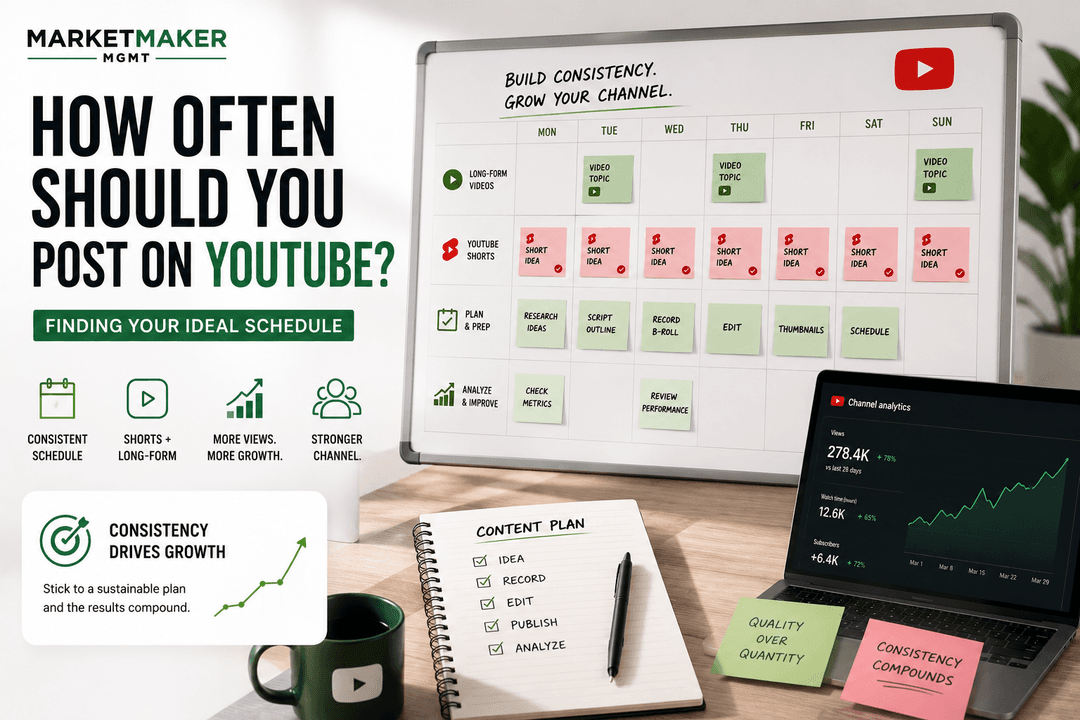
YouTube Shorts have changed the equation entirely. A sustainable schedule might look like: 1-2 long-form videos per week, plus 3-5 Shorts. The Shorts require significantly less production time but contribute meaningfully to channel growth and subscriber acquisition.
Many successful channels now use Shorts as their primary growth driver while long-form content serves their existing audience and drives watch time.
Finding Your Sweet Spot
Consider your resources realistically. If you're a solo creator, 1 long-form video + 4-5 Shorts per week is ambitious but achievable. If you have a team (or work with a management company), 2-4 long-form + 15-30 Shorts monthly becomes feasible.
The most important rule: whatever schedule you choose, be consistent. The algorithm rewards predictability, and your audience comes to expect content at regular intervals.
The Compound Effect: Each optimization you make builds on the last. A better thumbnail improves CTR. Higher CTR triggers more impressions. More impressions mean more data for the algorithm. More data means better targeting. Better targeting means higher retention. Higher retention triggers even more impressions. This virtuous cycle is why strategic channels grow exponentially while others flatline.
Pro Tip: Track these metrics weekly in a simple spreadsheet: CTR, average view duration, impressions, and subscriber conversion rate. After 90 days, you'll have enough data to identify exactly which strategies are driving your growth.
Burnout Prevention
Creator burnout is real and counterproductive. If maintaining your schedule means dreading every upload, something needs to change. Batch filming (recording 3-4 videos in one session), outsourcing editing, and having a content calendar all help maintain consistency without sacrificing your wellbeing.
The Bottom Line
YouTube rewards creators who understand its systems and work within them strategically. The platform wants to recommend great content to the right viewers — your job is to make that as easy as possible through optimization, consistency, and genuine value.
Every successful YouTube channel we've managed followed these same principles. The specifics vary by niche, but the fundamentals are universal. Start implementing today, measure your results, and iterate. The compound effect will take care of the rest.
The Upload Frequency Experiment
In 2025, YouTube creator Thomas Frank ran a fascinating experiment. He increased his upload frequency from once per week to three times per week for 90 days. The result? Total views increased by only 15%, but his watch time per video dropped by 40%. His audience couldn't keep up, and the algorithm noticed.
He then tried the opposite: reducing to one highly-produced video every two weeks, supplemented with 4-5 Shorts per week. The result was dramatic — his per-video views increased by 180%, and his subscriber growth rate actually accelerated.
The lesson: more uploads doesn't automatically mean more growth. The algorithm cares about performance per video, not just total output.
The Niche Factor
Upload frequency also depends heavily on your niche. News and commentary channels can post daily because their audience expects timely content. Tutorial and educational channels often perform better with weekly uploads because each video requires more production value.
Real estate channels find a sweet spot at 2-3 videos per week: one long-form market update or neighborhood tour, plus 2-3 Shorts showcasing properties or quick tips. Gaming channels can sustain daily uploads because production overhead is lower.
Building Your Content Calendar
The most sustainable approach is mapping out your content a month in advance. Assign specific content types to specific days — for example, tutorials on Tuesdays, Q&As on Thursdays. This structure reduces decision fatigue and helps your audience build viewing habits around your schedule.
Sources & References

Want results like the strategies discussed in this article? Let our team handle your YouTube growth.
Get Started