The short answer: you should probably be on both. The longer answer requires understanding what each platform does best and where your audience lives.
We've tested these strategies across hundreds of channels in dozens of niches. What follows isn't theory — it's a battle-tested playbook backed by real results. When a fitness client implemented this exact framework, their channel went from 8,000 to 120,000 subscribers in under a year. A real estate agent using these principles now generates 15+ inbound leads per week exclusively from YouTube.
Audience Demographics
YouTube reaches over 2.7 billion monthly active users globally, with strong representation across all age groups. Notably, 95% of internet users aged 18-29 use YouTube, but so do 83% of those aged 30-49 and 67% of those aged 50-64.
TikTok has approximately 1.5 billion monthly active users, skewing younger. About 60% of TikTok users are under 30, though the 30+ demographic is growing rapidly.
Content Longevity
This is YouTube's biggest advantage. YouTube videos continue generating views for months and years after publication. A well-optimized video can be your top-performing content piece for years.
TikTok content has a shorter lifecycle. While occasional videos go viral weeks or months later, most TikTok content peaks within 48-72 hours. This means TikTok requires more consistent output to maintain visibility.
Real-World Application: The channels that implement this consistently report measurable improvements within 60-90 days. One of our clients in the real estate niche saw a 340% increase in organic views after implementing this exact approach for just 90 days.
Advanced Insight: YouTube's algorithm processes over 80 different signals when deciding which videos to recommend. While you can't optimize for all of them, the strategies in this section address the 5-6 signals that carry the most weight.
Search vs. Feed
YouTube is a search-first platform. People come to YouTube with intent — they're looking for answers, tutorials, reviews, and information. This makes YouTube ideal for businesses where customers research before purchasing.
TikTok is a discovery-first platform. Users scroll the For You page and encounter content they didn't know they wanted. This makes TikTok ideal for brand awareness and impulse-driven products.
Monetization and Business Impact
YouTube offers more robust monetization options: ad revenue, channel memberships, Super Chats, and Shopping features. For businesses, YouTube also drives more measurable conversions because viewers are in a research mindset.
TikTok Shop and its advertising platform are maturing rapidly, but YouTube remains the stronger platform for B2B marketing, professional services, and high-consideration purchases.
The Compound Effect: Each optimization you make builds on the last. A better thumbnail improves CTR. Higher CTR triggers more impressions. More impressions mean more data for the algorithm. More data means better targeting. Better targeting means higher retention. Higher retention triggers even more impressions. This virtuous cycle is why strategic channels grow exponentially while others flatline.
Pro Tip: Track these metrics weekly in a simple spreadsheet: CTR, average view duration, impressions, and subscriber conversion rate. After 90 days, you'll have enough data to identify exactly which strategies are driving your growth.
The Repurposing Strategy
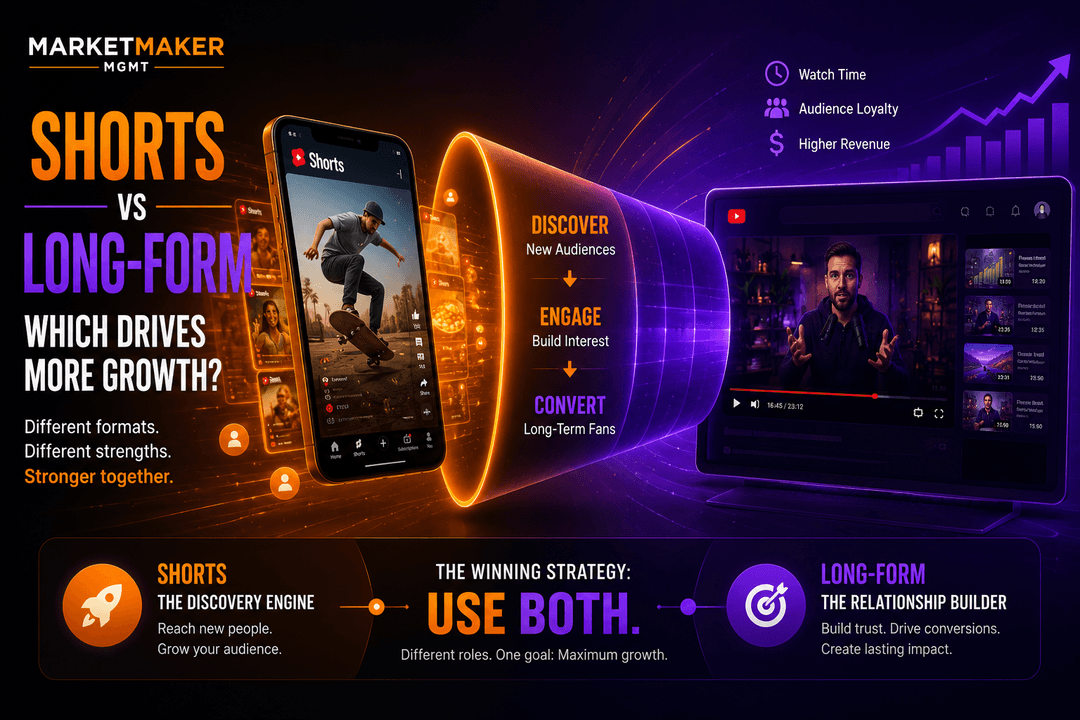
The smartest approach: create long-form content for YouTube, then repurpose highlights as YouTube Shorts AND TikTok posts. One filming session becomes content for both platforms with minimal extra effort.
YouTube Shorts and TikTok have similar formats (vertical, under 60 seconds), so the same short-form clips can be posted to both platforms with platform-specific adjustments.
The Bottom Line
YouTube rewards creators who understand its systems and work within them strategically. The platform wants to recommend great content to the right viewers — your job is to make that as easy as possible through optimization, consistency, and genuine value.
Every successful YouTube channel we've managed followed these same principles. The specifics vary by niche, but the fundamentals are universal. Start implementing today, measure your results, and iterate. The compound effect will take care of the rest.
Why This Matters More Than Ever in 2026
The YouTube landscape in 2026 is simultaneously more competitive and more opportunity-rich than ever before. The platform reaches 2.7+ billion monthly users, but only a fraction of potential creators are producing strategic, optimized content.
This means the gap between strategic creators and casual uploaders is widening. Channels that implement the approaches outlined in this guide are pulling further ahead, while those relying on "post and pray" strategies are falling further behind.
The good news? The fundamentals haven't changed: provide genuine value, optimize for discovery, and show up consistently. These principles worked in 2020, they work in 2026, and they'll work in 2030. The specific tactics evolve, but the core strategy of serving your audience better than anyone else never goes out of style.
Whether you implement these strategies yourself or partner with a professional YouTube management team, the important thing is to start. Every day you wait is a day your competitors are building the library, audience, and algorithmic momentum that will be increasingly difficult to catch.
Sources & References

Want results like the strategies discussed in this article? Let our team handle your YouTube growth.
Get Started