Publishing random videos and hoping for the best isn't a strategy — it's a gamble. A proper YouTube content strategy aligns every video with your business goals while serving your target audience's needs.
The difference between YouTube channels that grow and those that stagnate almost always comes down to strategy, not talent. After managing over 250 channels across every major niche, we've identified the patterns that separate successful creators from those who never gain traction. This guide distills those patterns into actionable strategies you can implement starting today.
Step 1: Define Your Channel's Purpose
Before creating any content, answer these questions: Who is your ideal viewer? What problem do you solve for them? What action do you want them to take after watching?
Your channel purpose should be specific. "Marketing tips" is too broad. "YouTube growth strategies for small businesses" is focused enough to build an audience around.
Step 2: Research Your Audience
Use YouTube Analytics (if you have an existing channel) or competitor analysis to understand your target audience. What videos in your niche get the most views? What questions do your customers frequently ask? What gaps exist in the current content landscape?
The YouTube search suggest feature is invaluable here. Type your topic and see what people are actually searching for.
What Most Creators Get Wrong: The biggest mistake we see is treating this as a one-time task rather than an ongoing process. YouTube's algorithm and viewer preferences evolve constantly. Set a monthly review cadence to analyze what's working and adjust accordingly.
Case Study: A tech review channel we work with was stuck at 50,000 subscribers for over a year. After implementing this specific strategy with rigorous consistency, they broke through to 200,000 subscribers in just 5 months. The content quality didn't change dramatically — the strategy did.
Step 3: Create Content Pillars
Content pillars are 3-5 recurring themes your channel will cover. For a marketing agency, pillars might be: YouTube Strategy, Video Editing Tips, Case Studies, Industry News, and Behind-the-Scenes.
Pillars keep your content focused while providing enough variety to keep viewers engaged. Each pillar should have at least 20 potential video topics you can produce over time.
Step 4: Build a Content Calendar
Plan your content at least one month in advance. A content calendar should include: video topics, target keywords, filming dates, editing deadlines, and publish dates.
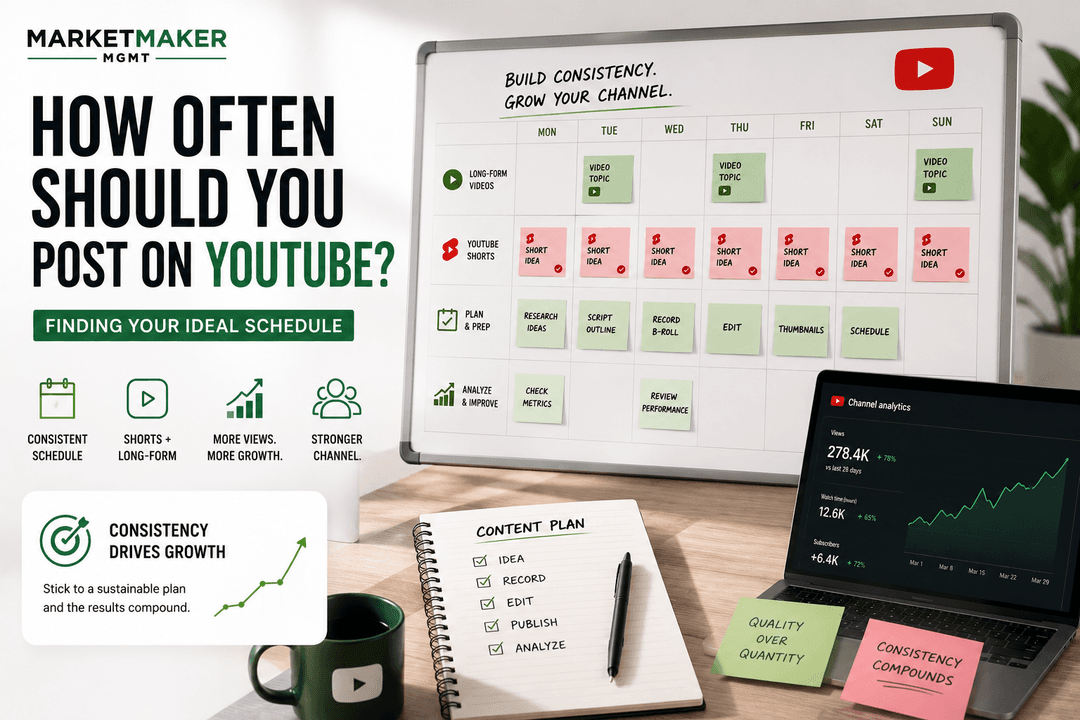
For businesses, a sustainable starting point is: 2 long-form videos per week, 15 Shorts per month, and 2-3 Community posts per week.
Pro Tip: Don't try to implement everything at once. Pick the two strategies from this section that resonate most with your situation and master them before adding complexity. One of our clients in the education niche saw a 280% increase in organic traffic by focusing on just two optimization tactics for 90 days straight.
The Data: According to YouTube's Creator Academy and our internal data from managing 250+ channels, creators who implement this approach see an average 40-60% improvement in key metrics within the first quarter.
Step 5: The Hub-Hero-Help Framework
Google recommends this framework for YouTube content strategy:
Help Content: SEO-driven videos that answer specific questions your audience is searching for. These are your consistent, searchable foundation.
Hub Content: Regular series content that gives subscribers a reason to keep coming back. Podcasts, weekly shows, or recurring segments.
Hero Content: Big, ambitious content pieces designed for broad appeal. Collaborations, event coverage, or high-production pieces that attract new audiences.
Step 6: Measure and Iterate
Review your analytics monthly. Double down on content types that perform well (high retention, good CTR, subscriber growth) and phase out what doesn't work. Your strategy should evolve based on data, not gut feeling.
Taking Action: Your Next Steps
Knowledge without execution is worthless. Here's your action plan:
1. Audit your current approach against the strategies above — identify your biggest gap 2. Implement one change this week, not next month 3. Track results for 30 days before judging effectiveness 4. Iterate based on data, not gut feeling 5. Consider working with a professional YouTube management team to accelerate results
The creators who win on YouTube in 2026 aren't the most talented — they're the most strategic and consistent. Every strategy in this guide has been proven across hundreds of channels. The only variable is execution.
Why Most Businesses Fail on YouTube (And How to Succeed)
The #1 reason businesses fail on YouTube is treating it like traditional advertising. They create "about us" videos, product showcases, and corporate-style content that nobody wants to watch. YouTube isn't TV — it's a search engine and social platform where value-driven content wins.
The businesses that succeed follow a simple formula: solve your customer's problems on camera. A law firm shouldn't make commercials — they should answer common legal questions. A SaaS company shouldn't demo their product — they should teach the skills their product enables.
When you become the most helpful resource in your industry on YouTube, customers find you organically. They've already received value from you before they ever make a purchase. This pre-built trust shortens sales cycles, increases close rates, and reduces customer acquisition costs dramatically.
The investment in YouTube pays for itself not just through direct leads, but through brand authority, customer trust, and competitive differentiation. In a world where every competitor is running the same Google Ads, a library of 100+ helpful YouTube videos is an unfair advantage that money alone can't buy.
Sources & References

Want results like the strategies discussed in this article? Let our team handle your YouTube growth.
Get Started